 Blogs
Blogs
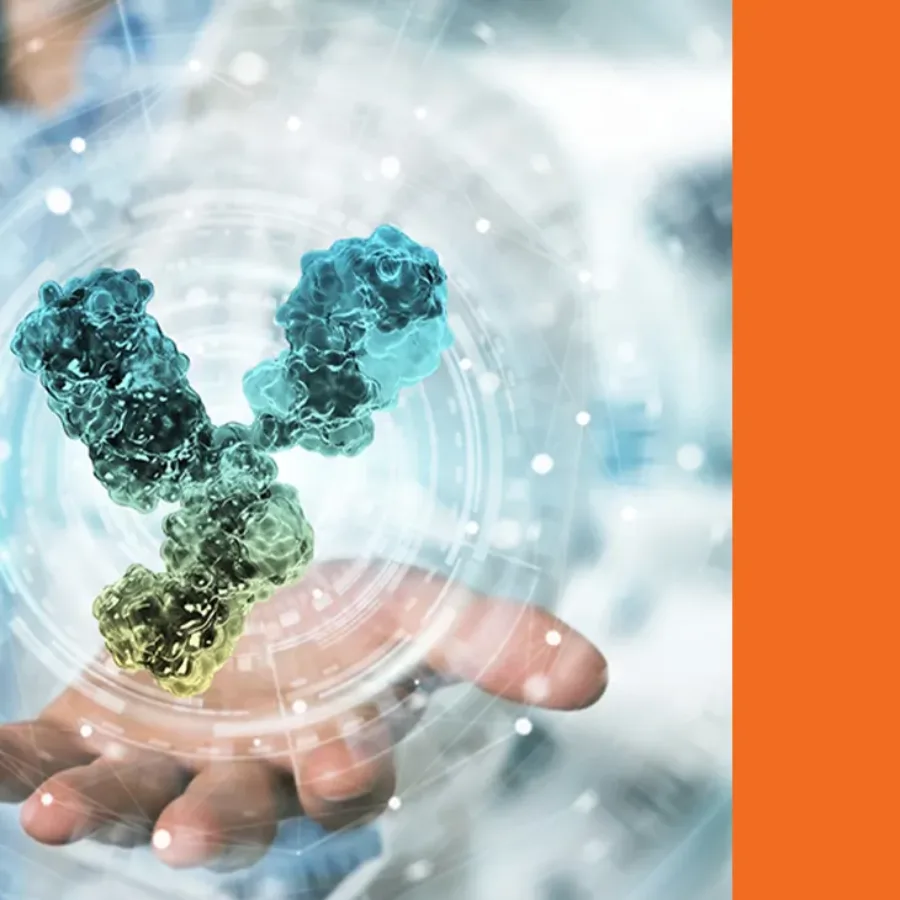
The age of therapeutic conjugation is upon us! Bioanalysis for support of next-generation Antibody Drug Conjugates (ADCs) and Antibody siRNA Conjugates (ARCs) have exploded recently due to the efficacy and safety that these therapies offer for immuno-oncology, rare diseases, vaccines, and potentially many other diseases. Recently, we have…
 Blogs
Blogs
Those of you attending the 18th annual WRIB meeting in San Antonio, TX are invited to attend a poster presentation being given by members of the KCAS Bio team: Jack Rogers, Jessie Allen, Yoka Thomas, and Cheikh Kane. This project developed and characterized a novel algorithm for automated…
 Blogs
Blogs
Dawn Dufield, PhD is the Scientific Officer for Mass Spectrometry and has been with KCAS Bio since 2018. Before joining KCAS Bio, she worked in the quantitative large and small molecule LC-MS/MS field for Pfizer for over 20 years. Dawn has been a pioneer in the Hybrid LCMS field…
 Videos
Dom & Dawn’s Opinion on the CRO Industry? Click here to view the entire series.
 Videos
Do You Feel that Many Bioanalytical CROs are Quick to Cover All of These Technologies? Click here to view the entire series.
 Videos
What are Some Scenarios Where More Than One Approach is Needed? Click here to view the entire series.
 Videos
Do You Have Examples of When You Started with One Testing Platform and Switched to Another? Click here to view the entire series.
 Videos
How do You Know Which Approach is Best? Click here to view the entire series.
 Videos
Are the Sensitivities Similar? Click here to view the entire series.
 Videos
What are the Differences Between Time and Costs for Development? Click here to view the entire series.
 Videos
Is Hybrid LC-MS/MS emerging as an Equal Partner? Click here to view the entire series.
 Videos
What is Hybrid LC-MS/MS? Click here to view the entire series.