 Blogs
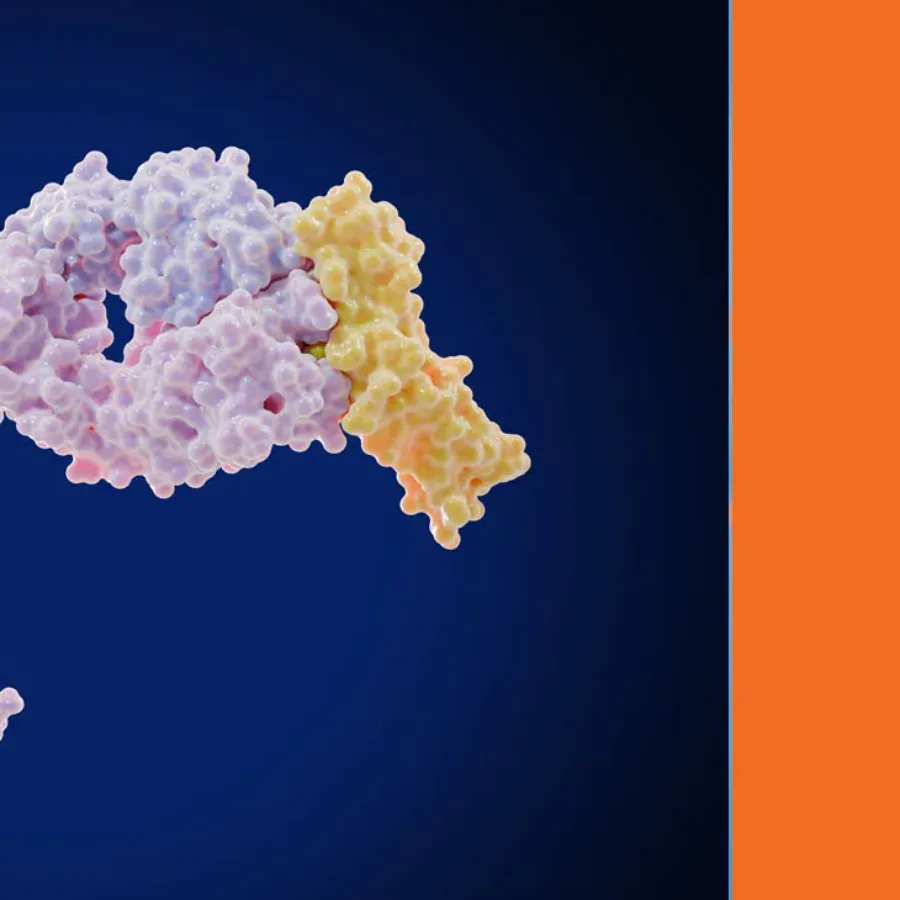
The challenge The sponsor asked us to develop and validate an electrochemiluminescence (ECL) ligand binding assay (LBA) to detect anti-drug antibodies (ADA) in human serum to support clinical studies. The therapeutic is a bispecific conjugated fusion protein with two functional domains, FD1 and FD2. Furthermore, FD1 has significant homology…
 News
KCAS Bio has been named the recipient of the 2026 Bioz Rising Star™ Award in the Biomarker Analysis category, recognizing the company’s growing presence and impact in scientific research. The Bioz Stars Awards recognize suppliers whose products and technologies contribute to scientific progress, using publication-based evidence to evaluate…
 Blogs
In previous blogs, we have discussed how flow cytometry can be used to identify both rare and abundant cell populations. Beyond characterization, these technologies can also be used to isolate specific cell populations for downstream applications such as functional testing, genomic analysis, cell therapy development, and biomarker research. …
 Posters & Papers
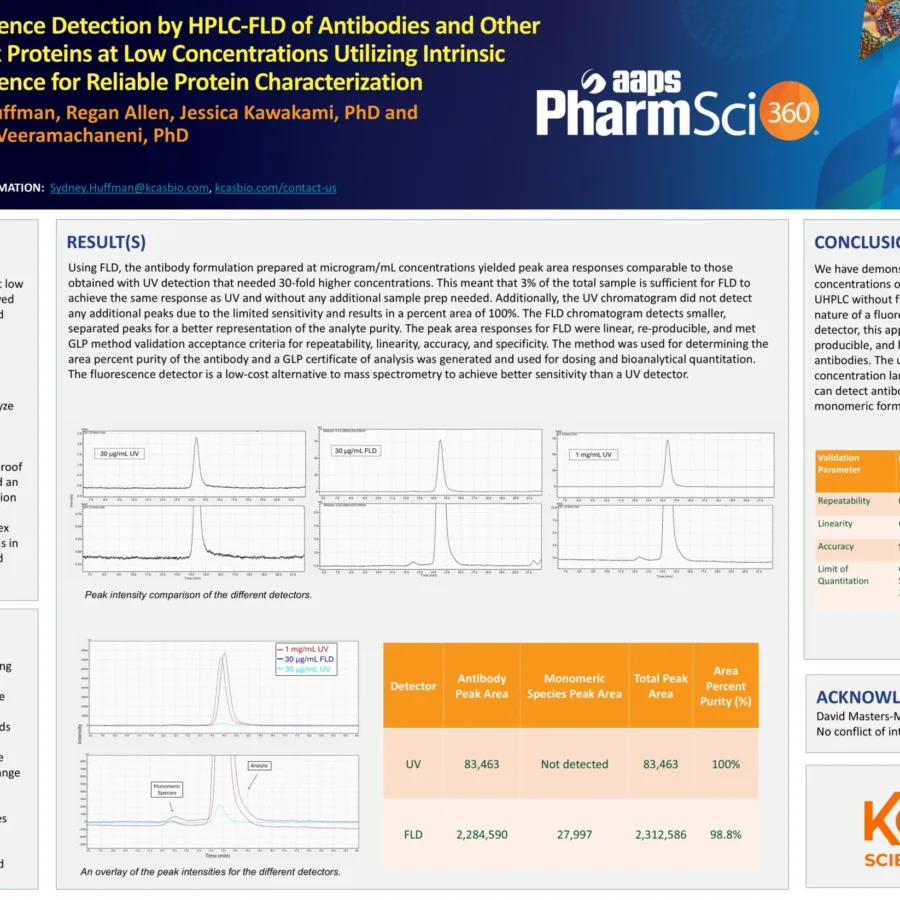
Fluorescence Detection by HPLC-FLD of Antibodies and Other Complex Proteins at Low Concentrations Utilizing Intrinsic Fluorescence for Reliable Protein Characterization Presented by Sydney Huffman at PharmSci 360, this poster highlights a validated HPLC-fluorescence detection (HPLC-FLD) method for detecting and quantifying low concentrations of antibodies and complex proteins without…
 Podcasts
In Episode #33 of The Conversational Flow, hosts Adam and Brian explore the latest developments in flow cytometry, immunology, and the evolving CRO industry. They examine new research into T-cell dynamics in graft-versus-host disease and regulatory T-cell stability, highlighting how flow cytometry and complementary technologies are advancing our understanding…
 Blogs
Selecting a bioanalytical CRO is an important decision in drug development, but the process begins well before proposals arrive. A well-structured request for proposal (RFP) gives a CRO the scientific and operational context they need to develop an accurate proposal. You may know what you need the data…
 Blogs
When a sponsor’s biologic program expanded from a domestic Phase 1 design into a multi-region trial spanning New Zealand, EMEA, and APAC, the bioanalytical challenge centered on keeping a fragile, time-sensitive sample chain intact across nine additional clinical sites, two outsourced processing labs, and a central analytical lab, all…
 November 3
- November 3
This symposium is for the drug development professional who wants to know more about how therapies of a variety of modalities move from preclinical through to clinical proof of concept. The preclinical data required and nice to have for optimal development as well as clinical design, planning and execution…
 Blogs
Here is a scenario we encounter regularly. A sponsor has a promising biologic, a T cell-engaging bispecific, a Treg-depleting antibody, or a checkpoint inhibitor with a novel target. The tox species are cynomolgus macaque, minipig, or dog. And the clinical team wants to know: what will we actually see…
 webinars
Flow cytometry can find a cell population in seconds, but naming it consistently across labs is a problem still unsolved. If you’ve ever tried to compare cytometry data across studies, CROs, or even two scientists in the same lab, you know the frustration: everyone gates their own way,…
 News
KCAS Bio scientists contributed to an industry working group publication addressing the development and validation of quantitative PCR (qPCR) and digital PCR (dPCR) assays used in regulated bioanalysis for cell and gene therapies. The publication has been recognized as a 2026 High Impact Article by the AAPS Journal.
Posters & Papers
This article is recognized as a 2026 High Impact Article by the AAPS Journal. This AAPS working group paper provides industry considerations for the design, development, and validation of qPCR and dPCR assays used in regulated bioanalysis for cell and gene therapies. Developed by 37 experts from 24 organizations,…