Oligonucleotide Bioanalysis Services
KCAS Bio provides integrated bioanalytical support utilizing multiple technology platforms for oligonucleotide programs across discovery, preclinical, and clinical development. Oligonucleotide therapeutics require specialized bioanalytical strategies to address challenges such nuclease degradation, metabolite complexity, tissue distribution, and matrix interference.

What are oligonucleotide therapies and how do they work?
Oligonucleotides are synthetic DNA- or RNA-based therapeutics developed to selectively target genetic sequences associated with disease. These therapies work by binding to RNA or DNA to alter gene expression, inhibit/promote protein translation, or regulate cellular processes.
- Oligonucleotide drug development includes therapeutic modalities:
- Conjugated oligonucleotide therapies (ARCs or AOCs)
- Antisense oligonucleotides (ASOs)
- siRNA
- mRNA
- Aptamers
- Guide RNA (gRNA)
These therapies are being developed across oncology, rare disease, neurological, and genetic indications.
Bioanalysis for oligonucleotides in drug development
LC-MS/MS and Hybrid LC-MS/MS for oligonucleotide bioanalysis
LC-MS/MS and hybrid LC-MS/MS approaches are commonly used to support oligonucleotide therapeutics across discovery, preclinical, and clinical development. These platforms provide sensitive and selective analysis for complex nucleic acid modalities, including ASOs, siRNA, mRNA, and conjugated oligonucleotide therapies.
Common applications include:
- Quantitative bioanalysis for pharmacokinetics (PK)
- Metabolite identification and profiling
- Biodistribution and tissue analysis
- Hybridization LC-MS/MS workflows for enhanced selectivity and sensitivity
- Support for conjugated oligonucleotide therapeutics
These analytical strategies help characterize oligonucleotide stability, metabolism, and distribution across biological matrices.
Molecular testing for oligonucleotides
Molecular bioanalysis supports characterization and monitoring of oligonucleotide therapeutics using sensitive nucleic acid detection approaches such as qPCR and ddPCR.
Common applications include:
- Gene expression analysis
- Biodistribution studies
- Translational biomarker assessment
- Quantitation of nucleic acid therapeutics
- Pharmacokinetic and pharmacodynamic support
These molecular approaches provide additional sensitivity and specificity for complex oligonucleotide programs.
Biomarker and ligand binding assay support for oligonucleotide therapeutics
Oligonucleotide therapies often require integrated biomarker strategies to evaluate pharmacodynamic response, mechanism of action, and immune signaling. Ligand binding assays (LBA) and multiplex biomarker platforms (LC-MS/MS, etc) support sensitive protein and cytokine analysis throughout development.
Common platforms and applications include:
- ELISA, MSD, Luminex, Ella, and Gyrolab platforms
- Cytokine and inflammatory marker analysis
- Pharmacodynamic biomarker assessment
- Protein expression analysis
- Immunogenicity and ADA testing
Integrated biomarker data helps support efficacy, safety monitoring, and translational decision-making for oligonucleotide programs.
Your molecule, our expertise. Let KCAS Bio help with your oligonucleotide project.
Phases of drug development for oligonucleotides
Discovery:
During discovery, oligonucleotide therapeutics are evaluated for target specificity, mechanism of action, stability, and early pharmacokinetic and pharmacodynamic performance. KCAS Bio can measure both sense and antisense information along with early indications of metabolites via HRMS.
Preclinical:
Preclinical development focuses on assessing biodistribution, metabolism, toxicity, and therapeutic activity through in vitro and in vivo studies designed to support IND-enabling programs in both non-GLP and GLP studies.
Clinical:
In clinical development, bioanalytical testing supports pharmacokinetics, biomarkers, immunogenicity, and safety monitoring to evaluate therapeutic performance across patient populations.
Oligonucleotide FAQs
What is oligonucleotide bioanalysis in drug development?
Oligonucleotide bioanalysis is the measurement and characterization of DNA- and RNA-based therapeutics used to understand pharmacokinetics, metabolism, biodistribution, and mechanism of action. It supports discovery through clinical development by evaluating how oligonucleotide therapies behave in biological systems.
What analytical methods are used for oligonucleotide bioanalysis?
Common methods include LC-MS/MS, hybrid LC-MS/MS, high-resolution mass spectrometry (HRMS), triple quadrupole (QqQ) analysis, qPCR, dPCR, and ligand binding assays. These platforms provide complementary data for quantitative, qualitative, and translational assessment of oligonucleotide therapeutics.
What challenges are associated with oligonucleotide bioanalysis?
Oligonucleotide bioanalysis must address nuclease degradation, metabolite complexity, tissue distribution, and matrix interference. These factors require orthogonal analytical approaches and multiple detection technologies to ensure accurate and sensitive measurement.
What types of oligonucleotide therapeutics can be analyzed?
Bioanalytical services support a wide range of modalities including antisense oligonucleotides (ASOs), siRNA, mRNA, aptamers, guide RNA (gRNA), and conjugated oligonucleotide therapies such as ARCs and AOCs across oncology, rare disease, neurological, and genetic programs.
How does oligonucleotide bioanalysis support drug development stages?
What analytical platforms does KCAS Bio use for oligonucleotide bioanalysis?
KCAS Bio uses complementary analytical approaches to support oligonucleotide bioanalysis, including high-resolution mass spectrometry (HRMS) and triple quadrupole (QqQ) platforms for quantitative and qualitative analysis of oligos. For select workflows, UPLC with fluorescence detection is also available when an additional detection mode is appropriate.
Why choose KCAS Bio for oligonucleotide bioanalysis?
Additional resources
 Posters & Papers
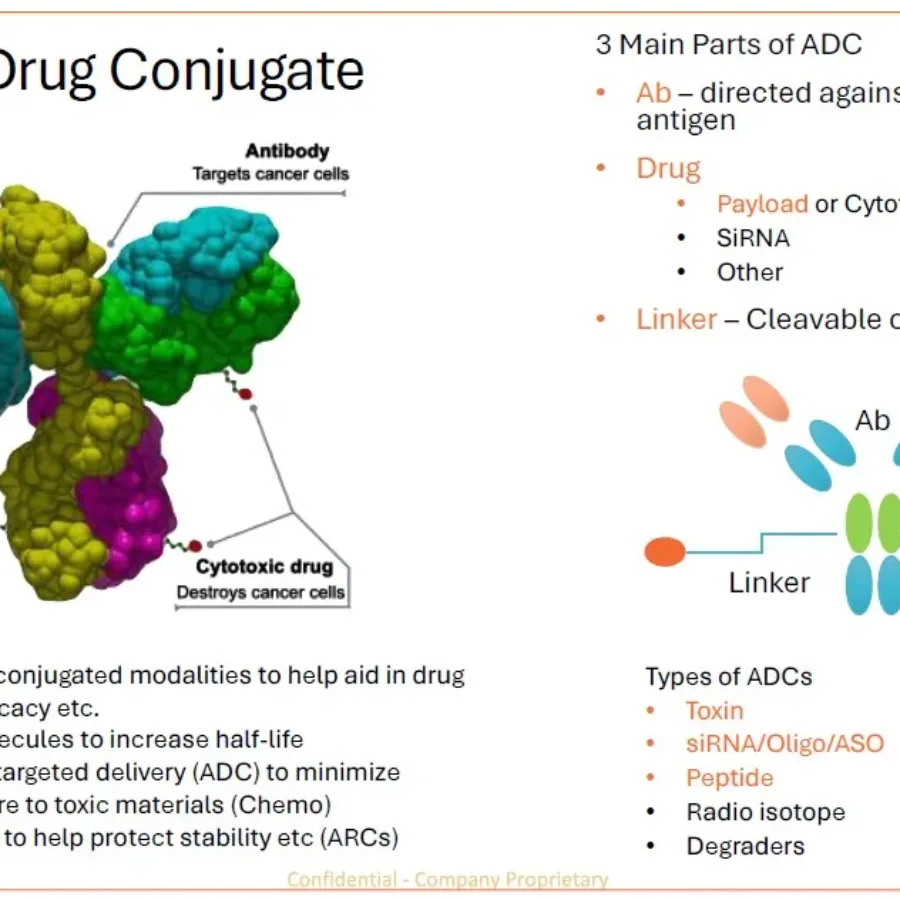
This presentation, given at the 2025 AAPS PharmSci Conference by Dawn Dufield, PhD, Scientific Officer of Mass Spectrometry at KCAS Bio, reviews Bioanalytical Strategies for Therapeutic Drugs and Their Conjugates (ADCs, Oligos, siRNA, ASOs and AOCs/ARCs) by QqQ/HRMS. If you have any questions about these services or any…
 Blogs
Blogs
Oligonucleotide therapeutics continue to reshape drug development by targeting disease pathways at the genetic level. Antisense oligonucleotides (ASOs), small interfering RNAs (siRNAs), and antibody-RNA conjugates (ARCs) are expanding the range of treatable diseases, particularly for targets that were previously considered inaccessible to conventional therapeutics. As these modalities evolve,…

Tell us how we can help with your project
We've earned our reputation for delivering reliable, error-free data. We understand the importance of speed, flexibility, and consistency and only make promises we can keep.