 Blogs
Blogs
Remember that childhood excitement the night before Christmas? Too excited to sleep, knowing something you wished for was finally within reach? That’s exactly the spirit fueling our teams in Lyon as we approach the end of June. We’re eagerly awaiting the arrival of a powerful new platform…
 Posters & Papers
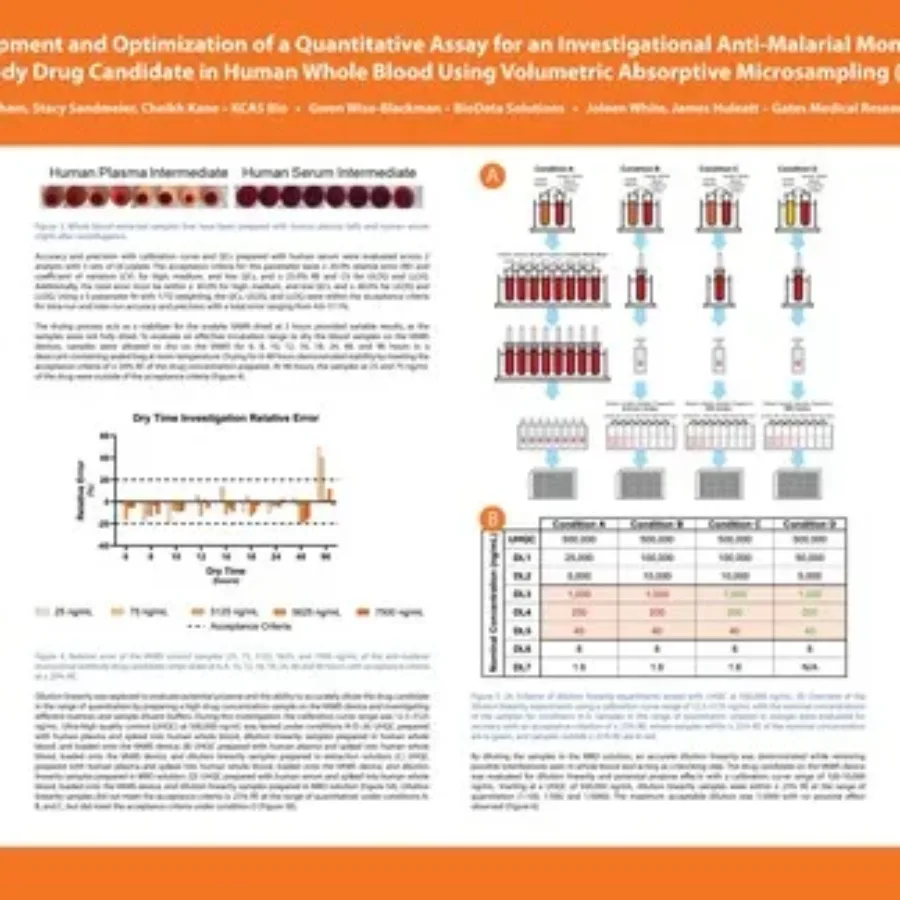
Discover in this poster presented by Jessica Pham at WRIB 2025 on the “Development and Optimization of a Quantitative Assay for an Investigational Anti-Malarial Monoclonal Antibody Drug Candidate in Human Whole Blood Using Volumetric Absorptive Microsampling (VAMS)”. If you have any questions about these services or any others…
 Blogs
Blogs
Initially developed to assess the frequency of circulating antigen-specific Antibody-Secreting Cells (ASC), ELISpot has become a vital tool for quantifying antigen-reactive T-cells by measuring secreted immune mediators such as cytokines or key molecules involved in cell-mediated cytotoxicity. Compared to other assays for monitoring cell-mediated immunity (CMI), such as…
 Blogs
Blogs
ADCs represent a promising class of targeted therapies, and understanding the intricacies of their analysis is crucial for their successful development. In this blog, we address common questions to guide you through the various considerations involved in ADC research and testing. We will cover key topics related to…
 Blogs
Blogs
Antibody-drug conjugates (ADCs) have been conventionally developed for a wide range of oncological applications since the first ADC approval in 2000 by the FDA. Typically, an ADC consists of three main components: antibody, linker conjugate, and therapeutic drug (payload). The mechanism of an ADC involves the antibody binding to a…
 Posters & Papers
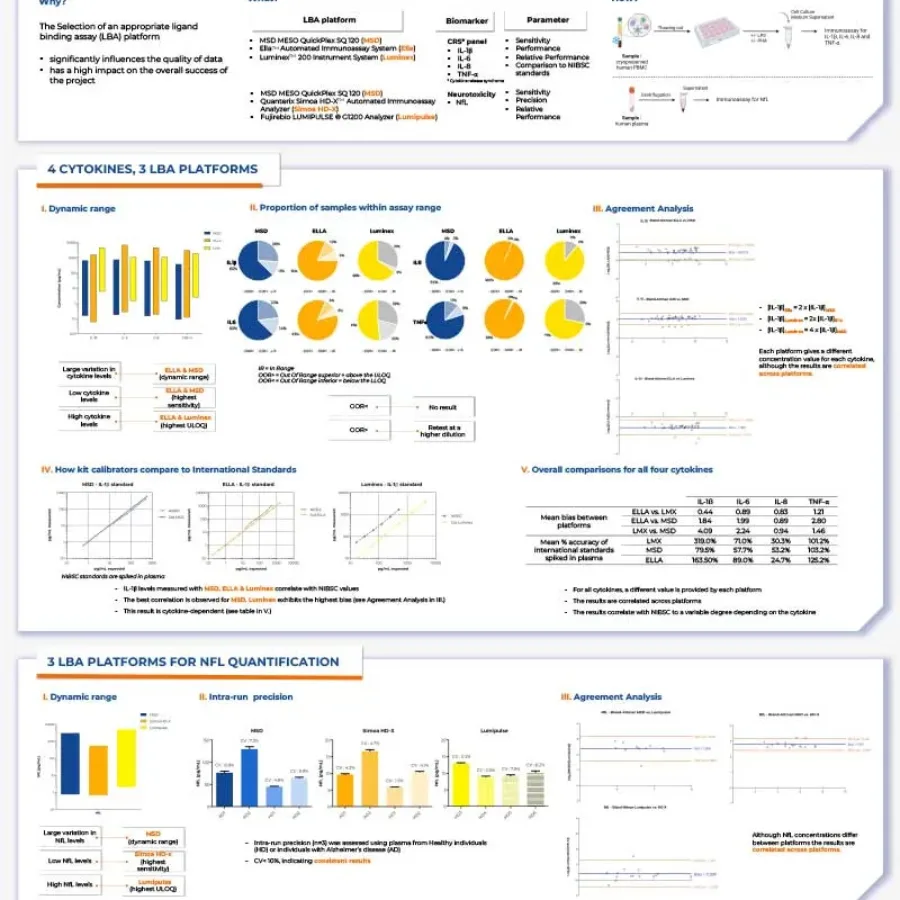
Discover in this poster presented by Fabien Lavocat at EBF Open Sympoisum 2024 on “Comparative Evaluation of Ligand Binding Assay Platforms for Biomarker Quantification: Critical Considerations for Ensuring Data Quality and Project Success”.
 Posters & Papers
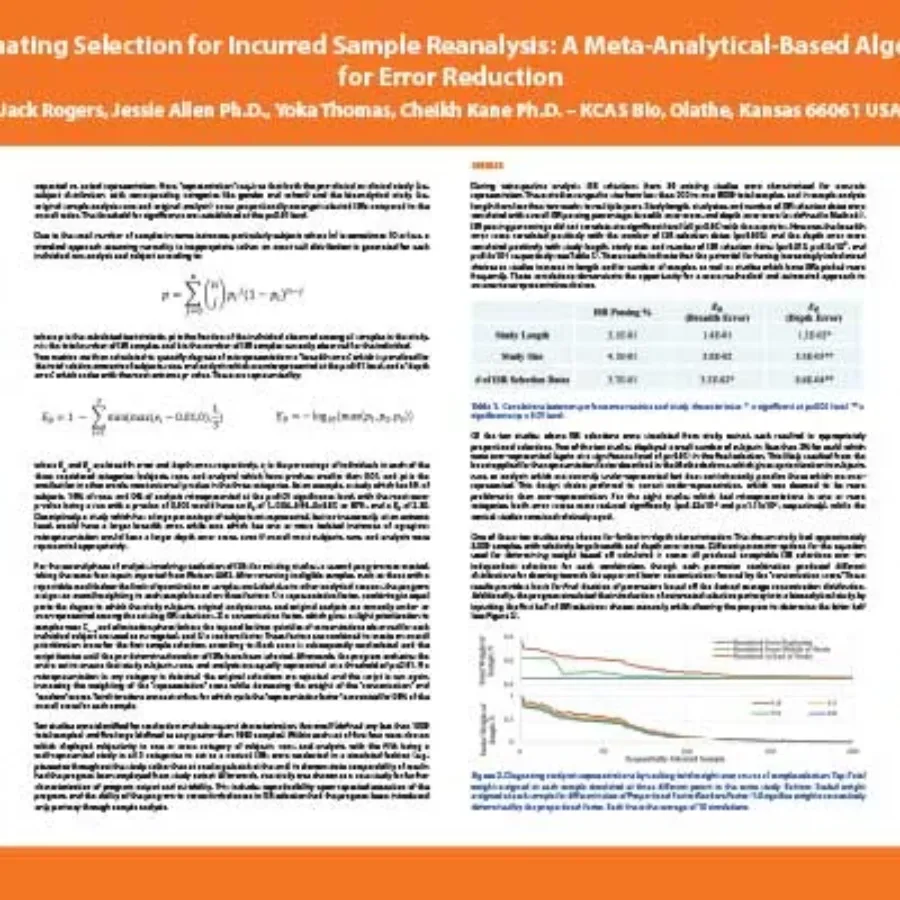
Please download this poster, “Automating Selection for Incurred Sample Reanalysis: A Meta-Analytical-Based Algorithm for Error Reduction”
 Blogs
Blogs
A pharmacokinetic (PK) assays evaluate how the body affects a specific substance after administration which includes: absorption, biodistribution, metabolism, and excretion. Preclinical (or non-clinical) PK assays play a crucial role in drug development and typically focus on assessing drug safety and maximum tolerable dose. For the development of pre-clinical…
 Podcasts
For episode #76 of “The Weekly Bioanalysis”, Dom and John talk about the popular topic of GLP-1 Analogues – these series of recent blockbuster drugs with multiple applications, as well as some of their bioanalytical challenges. First, the guys go over a little bit of the mechanism of action…
 Videos
Dom & Dawn’s Opinion on the CRO Industry? Click here to view the entire series.
 Videos
Do You Feel that Many Bioanalytical CROs are Quick to Cover All of These Technologies? Click here to view the entire series.
 Videos
What are Some Scenarios Where More Than One Approach is Needed? Click here to view the entire series.