
If an analyte is amenable to analysis, it’s difficult to ignore the benefits that LC-MS/MS can provide. There are numerous chaAntibody-drug conjugates (ADCs) have become one of the fastest growing classes of targeted therapeutics. By combining the specificity of monoclonal antibodies with highly potent cytotoxic payloads, ADCs are designed to deliver treatment directly to target cells while limiting off-target effects.
Their complexity, however, presents unique bioanalytical challenges.
Unlike traditional biologics or small molecules, ADCs cannot be adequately characterized with a single quantitative assay. Multiple parts of the ADC must be measured to fully understand how the molecule behaves in circulation, how stable the conjugate remains over time, and how much active drug is available throughout a study.
At KCAS Bio, comprehensive LC-MS workflows are designed to evaluate these critical attributes using sensitive, reproducible analytical approaches. By measuring multiple components of an ADC within a coordinated workflow, scientists can generate the pharmacokinetic and pharmacodynamic (PK/PD) data needed to support drug development.
Why ADC Bioanalysis Requires Multiple Assays
An ADC consists of three interconnected components:
- A monoclonal antibody
- A chemical linker
- A cytotoxic payload
Each component contributes differently to the overall behavior of the therapeutic, making comprehensive bioanalysis essential.
The workflow described in this study includes three quantitative assays that together provide a more complete understanding of ADC performance:
- Free payload quantitation
- Conjugated payload quantitation
- Total antibody quantitation
Each assay answers a different scientific question and contributes unique information about the stability, exposure, and behavior of the molecule.
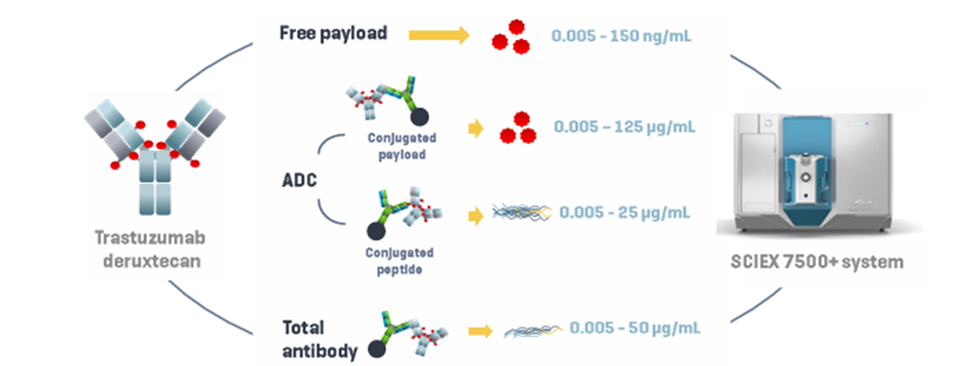
Figure 1. Comprehensive LC-MS workflow for quantitative analysis of multiple ADC analytes. Adapted from the collaborative WRIB case study developed by KCAS Bio and SCIEX.
Measuring Free Payload
One important objective of ADC bioanalysis is determining the amount of free payload circulating in plasma.
Because payload released before reaching its intended target may contribute to toxicity and unwanted side effects, sensitive quantitation of free payload helps evaluate ADC stability and therapeutic performance.
In this workflow, free payload analysis achieved a lower limit of quantitation (LLOQ) of 0.005 ng/mL while maintaining acceptable accuracy and precision across a broad calibration range.
The assay demonstrated:
- A linear dynamic range spanning 4.5 orders of magnitude
- Correlation coefficient (r²) greater than 0.992
- Accuracy within ±14%
- Precision with %CV below 8%
These results illustrate the sensitivity required to detect very low concentrations while maintaining quantitative performance.
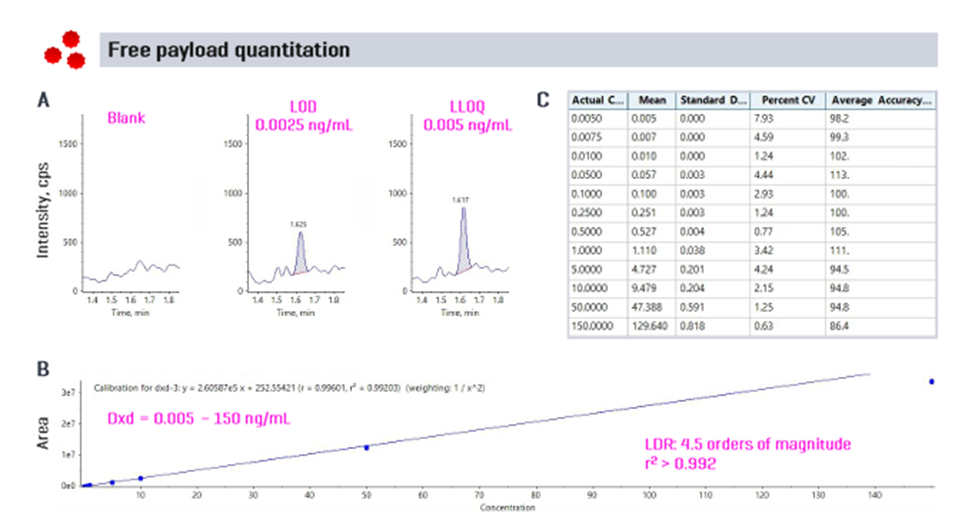
Figure 2. Overview of results from free payload assay.
Evaluating Conjugated ADC
Monitoring conjugated ADC provides insight into how much intact drug remains in circulation. Conjugated ADC can be evaluated based on the type of linker utilized for the synthesis of the ADC.
If the linker utilized for the ADC is a cleavable linker, an anti-IgG Ab or Anti-ID antibody can be utilized for immunoprecipitation enrichment and enzymes like papain/cathepsin can be used to cleave the payload. Monitoring the payload correlates to the level of conjugated ADC present in the sample. Payload-based quantitation is particularly useful for ADCs containing cleavable linkers when a selective anti-payload antibody is available.
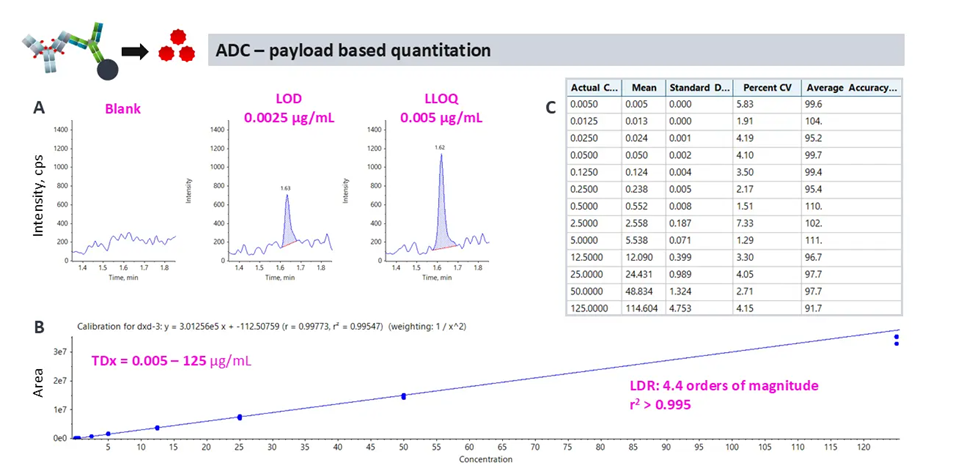
Figure 3. Overview of results from payload-based conjugate ADC assay.
In contrast, peptide-based assays are valuable for molecules with non-cleavable linkers or heterogeneous conjugation strategies where direct payload measurement may not fully represent ADC exposure.
Using trastuzumab deruxtecan (cleavable linker) as the model compound, payload-based quantitation demonstrated strong quantitative performance across wide concentration ranges while meeting established acceptance criteria for accuracy and precision.
Measuring Total Antibody
Total antibody measurements provide another important perspective on ADC disposition.
Rather than measuring only the conjugated species, total antibody analysis captures the antibody component regardless of payload status. This information complements payload measurements and helps create a more complete picture of the molecule’s pharmacokinetic profile.
In this study, total antibody quantitation achieved:
- An LLOQ of 0.005 µg/mL
- Four orders of magnitude of linear dynamic range
- Accuracy within ±7%
- Precision below 10% CV
The combination of sensitivity and reproducibility supports confident quantitation across a broad concentration range.
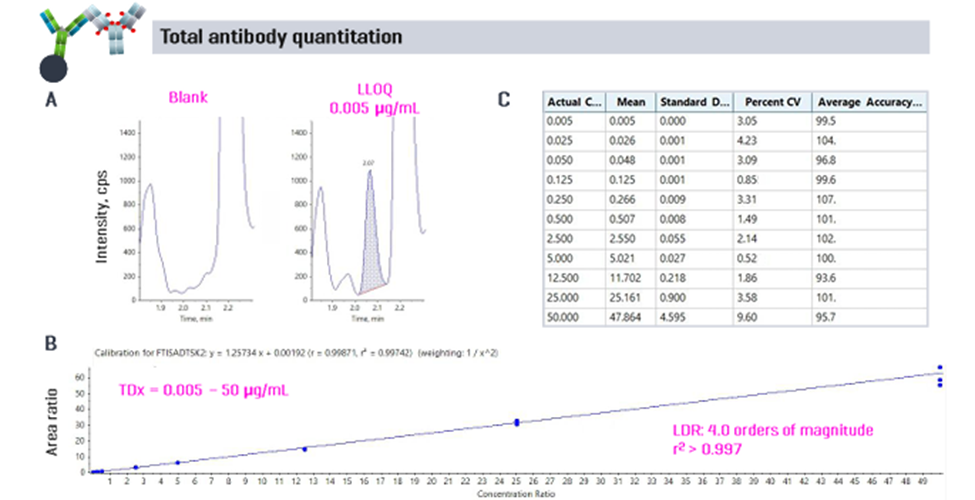
Figure 4. Overview of surrogate peptide quantitation as a measure of the total antibody.
Building a Comprehensive ADC Bioanalytical Workflow
While each assay provides valuable information independently, the greatest benefit comes from integrating them into a comprehensive workflow.
Together, measurements of free payload, conjugated payload, surrogate peptide, and total antibody provide complementary information about:
- ADC stability
- Drug exposure
- Targeted delivery
- Therapeutic performance
This multi-assay strategy enables a more complete PK/PD evaluation than any individual measurement alone.
The workflow described in this study was performed using a consistent chromatographic setup, allowing all assays to be executed on the same mobile phase system and a single analytical column configuration. This streamlined approach supports efficient laboratory execution while maintaining strong quantitative performance.
Quantitative Performance Across the Workflow
Across all four assays, the workflow demonstrated consistent analytical performance.
Key outcomes included:
- Free payload LLOQ of 0.005 ng/mL
- Conjugated payload LLOQ of 0.005 µg/mL
- Total antibody LLOQ of 0.00 µg/mL
- Linear dynamic ranges extending up to 4.5 orders of magnitude
- Correlation coefficients greater than 0.991
- Accuracy within established acceptance criteria
- Precision with coefficients of variation below 10%
Collectively, these results demonstrate the ability to generate sensitive, reproducible quantitative data across multiple analytes within a unified workflow.
Comprehensive Bioanalysis Supports Better Decision Making
As ADCs continue to advance, bioanalytical strategies must evolve alongside increasingly complex therapeutic designs.
Rather than relying on a single analytical measurement, comprehensive workflows that evaluate multiple components of an ADC provide a more complete understanding of molecular stability, exposure, and behavior throughout development.
By integrating free payload, conjugated payload, and total antibody quantitation into one coordinated LC-MS workflow, scientists can generate the robust PK/PD data needed to support confident decision making across the drug development process.
This article is based on a scientific poster presented at WRIB through a collaboration between KCAS Bio and Sciex. The work highlights a comprehensive LC-MS workflow for antibody-drug conjugate bioanalysis. Click here to access the full case study based on the scientific poster.
To learn more about our ADC expertise and how we can support your studies, fill out the form below to speak with a scientist.