
Pharmacokinetics Analysis Services
KCAS Bio provides bioanalytical services supporting pharmacokinetic (PK) studies across preclinical and clinical development. Services focus on the quantitative bioanalysis using validated and fit-for-purpose analytical methods.

Your bioanalytical partner for PK assays
Decades of Proven Expertise
Our team brings extensive experience in pharmacokinetic studies. We develop and validate custom PK assays tailored to the molecule, study type, and regulatory requirements.
Broad Analytical Platform Suite
We leverage LC–MS/MS, immunoassays (ELISA, ECL/ECLIA-MSD®), Luminex®, and qPCR/dPCR to quantify drug and metabolite concentrations across a variety of matrices.
Context-of-Use Driven Strategy
Assay development and validation are guided by study phase, therapeutic modality, and regulatory expectations, ensuring methods are fit-for-purpose. Validation strategies are tailored to context, including full, partial, or cross-validation depending on whether the method is new, modified, or transferred.
Regulatory Alignment
All workflows can be executed under GLP, non-GLP, or GxP compliance, with documentation aligned to FDA, EMA, and ICH M10 guidance for bioanalytical PK data.
What is PK analysis?
PK analysis measures how a drug is absorbed, distributed, metabolized, and eliminated in the body. Understanding a therapeutic’s PK profile is essential for safe and effective dosing.
KCAS Bio supports PK programs with comprehensive bioanalytical services enabling support for all drug modalities at any stage of development to guide sponsor decision‑making.
Key activities
-
Bioanalysis of in vivo PK samples
-
Bioanalysis of clinical PK samples
-
Method development, transfer and validation
-
Regulated and non-regulated sample analysis and reporting
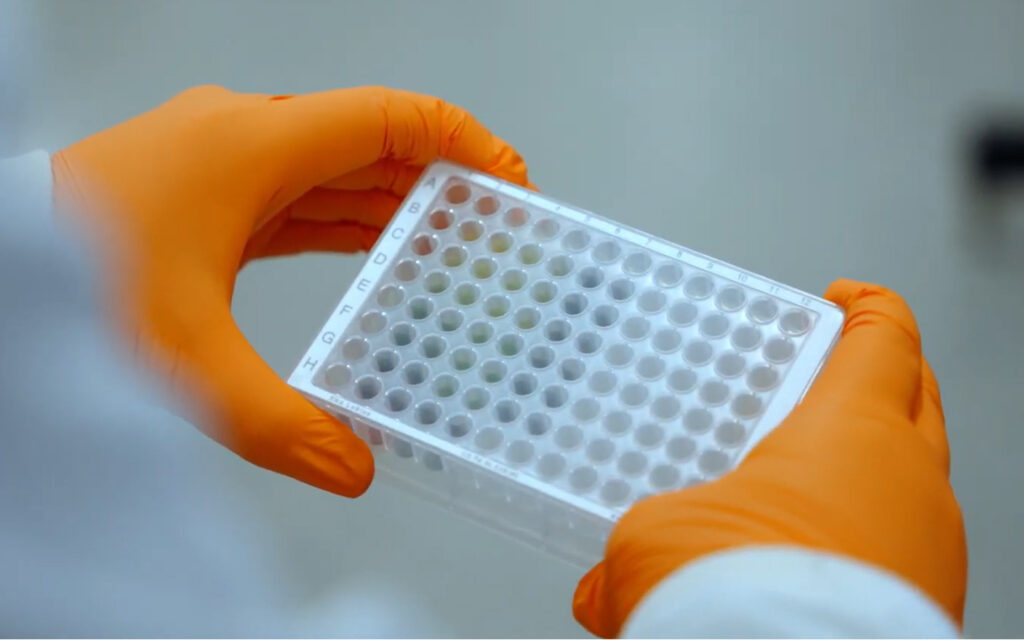
Your molecule, our expertise. Let KCAS Bio help with your PK studies.
Applications of PK analysis in drug development
PK analysis is applicable across therapeutic modalities and disease areas, with specific uses and requirements at each stage of drug development, from early discovery through clinical studies.
 Phases of Drug Development
Discovery: Early assessment of PK properties to guide molecule selection, including feasibility of assay development and identification of optimal bioanalytical platforms.
Preclinical Studies: Conduct of pivotal PK/TK studies in animals under GLP or non-GLP conditions, with method validation and regulated sample analysis to characterize absorption, distribution, metabolism, and excretion.
Pre-IND Preparation: Development and validation of fit-for-purpose PK assays, including full, partial, or cross-validation as needed, to ensure robust methods are ready for clinical sample testing.
Clinical Development: Implementation of validated PK bioanalytical assays to quantify drug and metabolite concentrations, generate regulatory-compliant reports, and support dosing decisions from Phase I through late-stage trials.
Capabilities and tools for PK analysis
KCAS Bio leverages advanced analytical platforms to deliver precise, reliable PK data. Whether your program involves small molecules bioanalysis, biologics, or complex modalities, we select the most appropriate technology and assay design based on your project’s requirements.
Ligand Binding Assays
LBA are a widely used and reliable approach for PK studies, particularly for biologics such as monoclonal antibodies. They offer high sensitivity and specificity for quantifying drug concentrations in complex matrices, enabling robust analysis in both preclinical and clinical studies. LBA are ideal for routine PK monitoring and for assessing exposure of therapeutic proteins.
Hybrid LC–MS/MS
Hybrid LC–MS/MS is increasingly used for complex modalities like antibody-drug conjugates (ADCs). This approach allows for simultaneous quantification of multiple analytes, including drug and linker components, reducing the number of assays needed.
Molecular Services
Molecular techniques track the distribution and persistence of gene and nucleic acid therapies, including AAV, LNP, and lentiviral vectors. Capabilities include:
- Copy number analysis for transgenes
- ALU repeat assays for human genomic DNA in preclinical species
- Cell persistence measurements
- Small RNA PK (siRNA, gRNA, microRNA) using stem-loop RT-qPCR
Technology and instrumentation for PK analysis
Our laboratories are equipped with state-of-the-art instrumentation to provide reliable results for PK analysis.
We have advanced technology to move your science forward. Speak with a KCAS Bio expert now.
Why work with KCAS Bio?

Full-Service Bioanalysis
End-to-end method development, validation, and reporting under one roof.
Regulatory Expertise
Deep familiarity with ICH, FDA, and EMA requirements.
Cutting-Edge Technology
Cutting-edge technologies for sensitive, reliable PK analysis across LBA, Hybrid LC-MS/MS and molecular biology assays.
Flexible, Customized Workflows
Tailored workflows to meet unique project goals and timelines.
Broad Sample Type and Matrix Expertise
Plasma, serum, urine, CSF, and tissues plus unstable/rare matrices and microsampling methods
Global Presence with Harmonized Quality
Consistent technical standards and harmonized operations worldwide
PK analysis services FAQs
Do you offer GLP and non-GLP PK/TK testing?
PK/TK bioanalysis can be conducted under GLP or non-GLP compliance, depending on study objectives and development stage, with appropriate documentation to support regulatory submissions when required.
Do you support PK bioanalysis across all drug modalities?
Yes. PK bioanalytical services support a wide range of modalities, including small molecules, monoclonal antibodies, antibody-drug conjugates (ADCs), antibody-radionuclide conjugates (ARCs), and other conjugated biotherapeutics, as well as nucleic acid and gene-based therapies.
Do you offer generic PK assays?
Yes. Generic (or universal) PK assays are available to measure circulating human biotherapeutics, primarily antibody-based therapies, across a range of non-human matrices. These assays are particularly useful in early drug development or for novel antibody formats when drug-specific reagents, such as anti-idiotype antibodies, are not yet available.
How to choose between LBA, hybrid LC–MS/MS, & molecular assays for PK studies?
The choice depends on the therapeutic modality, study phase, sensitivity requirements, and matrix. LBA are commonly used for biologics, hybrid LC–MS/MS supports complex and conjugated modalities, and molecular assays are suited for gene and nucleic acid therapies. Our experts can advise on the most appropriate approach based on your program’s context-of-use.
Additional resources
 webinars
As the field of biotherapeutics rapidly evolves, the development of advanced conjugated therapies such as Antibody-Drug Conjugates (ADCs), Antibody-RNA Conjugates (ARCs), siRNA/oligos, and antibody-peptide conjugates has gained significant momentum. These next-generation therapeutics offer promising efficacy and safety profiles for treating various conditions, including cancer, rare diseases, and in vaccine development.
 Blogs
Blogs
What is a generic PK assay? A generic pharmacokinetic (PK) assay, also referred to as a universal PK assay for New Biologic Entities (NBE), is used to measure circulating human biotherapeutics—primarily antibody-based—post-administration across various non-human matrices. These assays are particularly beneficial when drug-specific reagents, such as anti-idiotype antibodies, are…
 Blogs
Blogs
Understanding the intricate relationship between drugs and the human body is crucial for effective medical treatments. Two fundamental concepts in pharmacology – pharmacokinetics and pharmacodynamics – play pivotal roles in this understanding. This blog post will delve into these concepts, exploring their differences and significance in drug development and clinical…

Tell us how we can help with your project
We've earned our reputation for delivering reliable, error-free data. We understand the importance of speed, flexibility, and consistency and only make promises we can keep.