PBMC Bioanalysis
KCAS Bio delivers high-quality peripheral blood mononuclear cell (PBMC) analysis to support immunology-driven drug development from discovery through clinical trials.

What are PBMCs and how do they work?
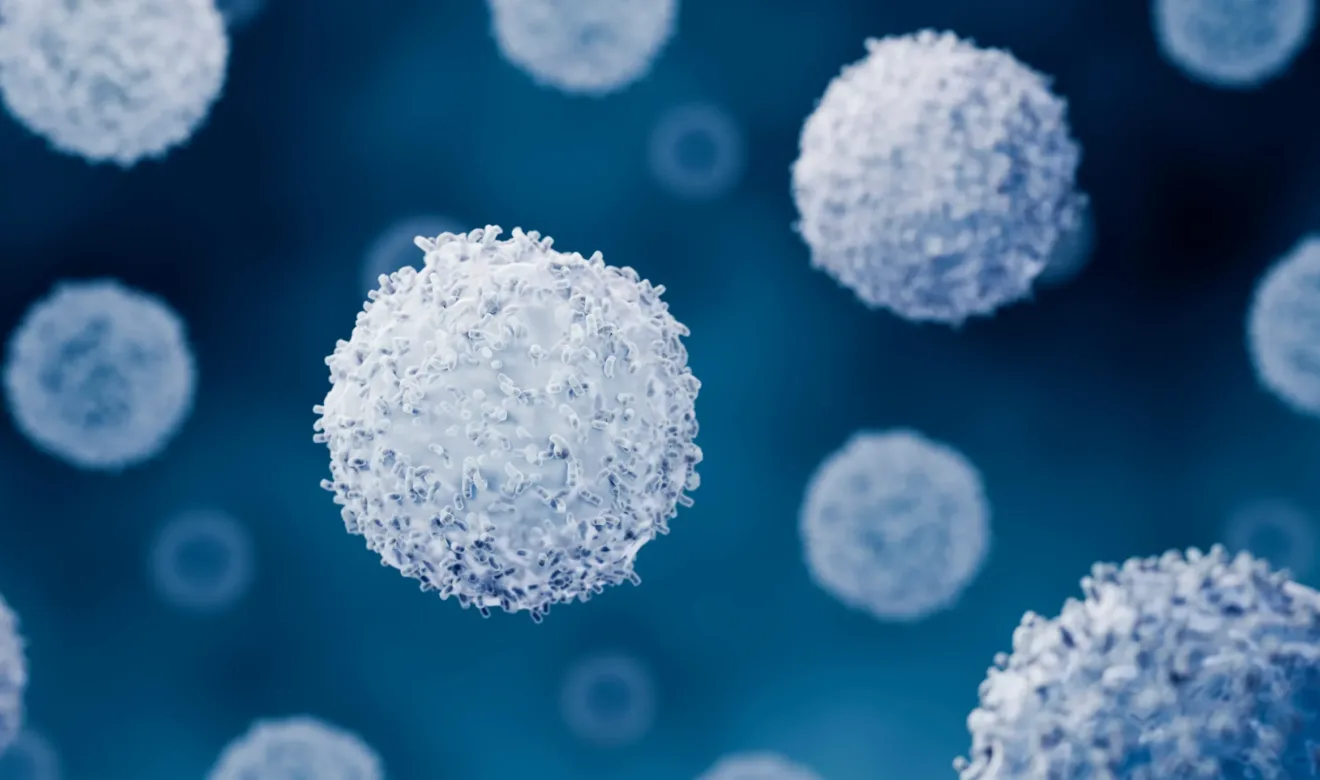
Peripheral Blood Mononuclear Cells (PBMCs) are immune cells isolated from blood that are widely used to evaluate immune response, drug activity, and biomarker changes in drug development. This mixed population of lymphocytes (T cells, B cells, NK cells) and monocytes provides a functional view of the immune system and is commonly analyzed using flow cytometry, ELISpot, and cytokine assays.
PBMCs are typically isolated using density gradient centrifugation, which separates mononuclear cells from other blood components based on density. Once isolated, multiple analytical platforms can be applied to characterize PBMCs can be applied across to:
- Identify and quantify immune cell subsets
- Measure activation, proliferation, and exhaustion markers
- Assess intracellular and secreted cytokine responses
- Evaluate antigen-specific immune activity through functional assays (e.g., ELISpot)
- Support receptor occupancy and target engagement assessments
Because PBMCs preserve viable, functional immune cells, they are particularly well suited for ex vivo stimulation assays and longitudinal immune monitoring in both preclinical and clinical studies.
Bioanalysis for PBMC in drug development
PBMC bioanalysis is used in drug development to assess immunogenicity, pharmacodynamic activity, and biomarker responses by measuring how immune cells react to a therapy. By combining cellular, functional, and soluble readouts, PBMC-based approaches help link drug exposure to biological effect and clinical outcomes.
Immunogenicity and immune monitoring with PBMCs
PBMC assays provide a cellular view of immune recognition and response to therapeutics, offering early insight into immunogenicity risk. While anti-drug antibodies (ADA) are measured in serum, PBMCs help characterize the upstream immune activation that drives these responses.
- Flow cytometry to assess immune cell activation and population shifts
- ELISpot assays to detect antigen-specific T-cell responses
- Multiplex cytokine analysis (MSD, Luminex) to profile immune signaling
- Immunogenicity testing to quantify ADA and neutralizing antibodies
These data connect cellular immune activity with downstream antibody responses.
Biomarker discovery and validation using PBMCs
PBMCs provide a translational source of immune biomarkers that reflect both mechanism of action and treatment response. Integrating phenotypic and functional data enables identification of meaningful immune signatures.
- Flow cytometry for immune subset profiling
- ELISpot assays for functional immune responses
- Multiplex cytokine platforms for biomarker development
- High-sensitivity immunoassays for low-abundance markers
This approach supports biomarker progression from discovery through clinical validation.
Pharmacodynamic assessments from PBMC analysis
PBMC analysis captures dynamic immune changes that reflect pharmacodynamic activity and target engagement. These data provide a direct link between drug exposure and biological effect.
- Flow cytometry for immune subset profiling
- ELISpot assays for functional immune responses
- LC-MS/MS bioanalysis to establish exposure–response relationships
- Cytokine profiling to assess systemic immune modulation
- Cell-based assays, including ELISpot, to confirm pathway activation
Together, these datasets support dose selection and translational decision-making.
Phases of drug development for PBMC
PBMC-based flow cytometry assays are applied across the full drug development continuum, evolving from exploratory tools to validated, regulatory-ready methods.
Discovery:
PBMC assays are used to investigate mechanism of action, assess target engagement, and characterize early immune responses using ex vivo human systems. These studies support candidate selection and inform biomarker strategies for downstream development.
Preclinical:
In preclinical development, PBMC analysis evaluates immune modulation and refines biomarker panels in support of IND-enabling studies. Assays are optimized for robustness and reproducibility, aligning with anticipated clinical endpoints.
Clinical Trials and Translational Research:
In clinical and translational phases, PBMC assays support pharmacodynamic assessments, immunogenicity evaluation, and patient stratification. Methods are validated for regulatory use and integrated with PK, biomarker, and clinical data to enable comprehensive interpretation of therapeutic impact.
PBMC FAQs
What are PBMCs used for in drug development?
PBMCs are used to evaluate immune response, pharmacodynamic effects, and biomarker changes by analyzing immune cell populations and function during preclinical and clinical studies.
What types of studies benefit most from PBMC analysis?
PBMC analysis is particularly valuable for immuno-oncology, autoimmune diseases, vaccines, cell therapies, and any program where immune modulation is a key component of efficacy or safety.
How are PBMCs analyzed?
PBMCs are analyzed using flow cytometry for cell phenotyping, ELISpot for antigen-specific responses, and cytokine assays such as ELISA or multiplex platforms for immune signaling.
Are PBMCs used for immunogenicity testing?
PBMCs are not used to directly measure anti-drug antibodies (ADA), but they are critical for assessing the cellular immune responses that can lead to immunogenicity.
What is the difference between PBMC and whole blood analysis?
PBMC analysis isolates mononuclear immune cells for more detailed functional and phenotypic studies, while whole blood analysis includes all components and is typically used for broader screening.
How does PBMC analysis integrate with other bioanalytical data?
PBMC-derived data can be correlated with PK data (via LC-MS/MS or LBA), soluble biomarkers, and clinical endpoints to provide a comprehensive understanding of drug activity.
What types of assays does KCAS Bio offer on PBMCs?
KCAS Bio provides immunophenotyping, intracellular cytokine staining (ICS), proliferation assays, activation marker analysis, and rare cell population detection using advanced multiparametric flow cytometry. In addition, KCAS Bio can analyze live or lysed PBMCs to understand immune function or the presence of drugs, metabolites, and substrates within the immune compartment.
Additional resources
 Blogs
Blogs
If you have trained in the field of immunology, it may not be uncommon to emerge with a self-characterization as either a “B-cell immunologist” or a “T-cell immunologist.” Historically, this distinction arose from years of specialization and the degrees of separation between T-cell and B-cell biology research. Approaches to…
 Blogs
Blogs
Cell-based immunotherapies like Chimeric Antigen Receptor (CAR)-T cell therapy have been transforming the treatment of hematologic malignancies for more than a decade. Several groundbreaking studies (1) have led to a growing interest in applying these cell-based therapies to other T and B cell-mediated diseases. One emerging application of CARs…
 Blogs
Blogs
What is Immunogenicity Assessment? Immunogenicity refers to the ability of a substance, such as a New Biological Entity (NBE) or a vaccine, to provoke an immune response when administered in the body. The recognition of the substance as foreign triggers an immune response, which involves the production of antibodies and…

Tell us how we can help with your project
We've earned our reputation for delivering reliable, error-free data. We understand the importance of speed, flexibility, and consistency and only make promises we can keep.