
CAR-T Cell Therapy Support
CAR‑T cell therapy is an advanced immunotherapy that requires specialized, regulatory‑aligned bioanalytical strategies to support development and clinical evaluation. KCAS Bio delivers integrated molecular, cellular, and biomarker testing to evaluate safety, potency, persistence, and immune response throughout clinical programs.

What is CAR-T and how does it work?
Chimeric Antigen Receptor T-cell (CAR-T) therapy is an advanced cell therapy approach that engineers either self or donor derived T cells to recognize and destroy disease-causing cells. CAR-T therapies are most commonly used in hematologic cancers and are expanding into solid tumors, autoimmune disorders, and rare diseases.
Because CAR-T treatment is a living therapy, they require specialized analytical strategies to evaluate safety, potency, persistence, and immune response throughout development and clinical trials.
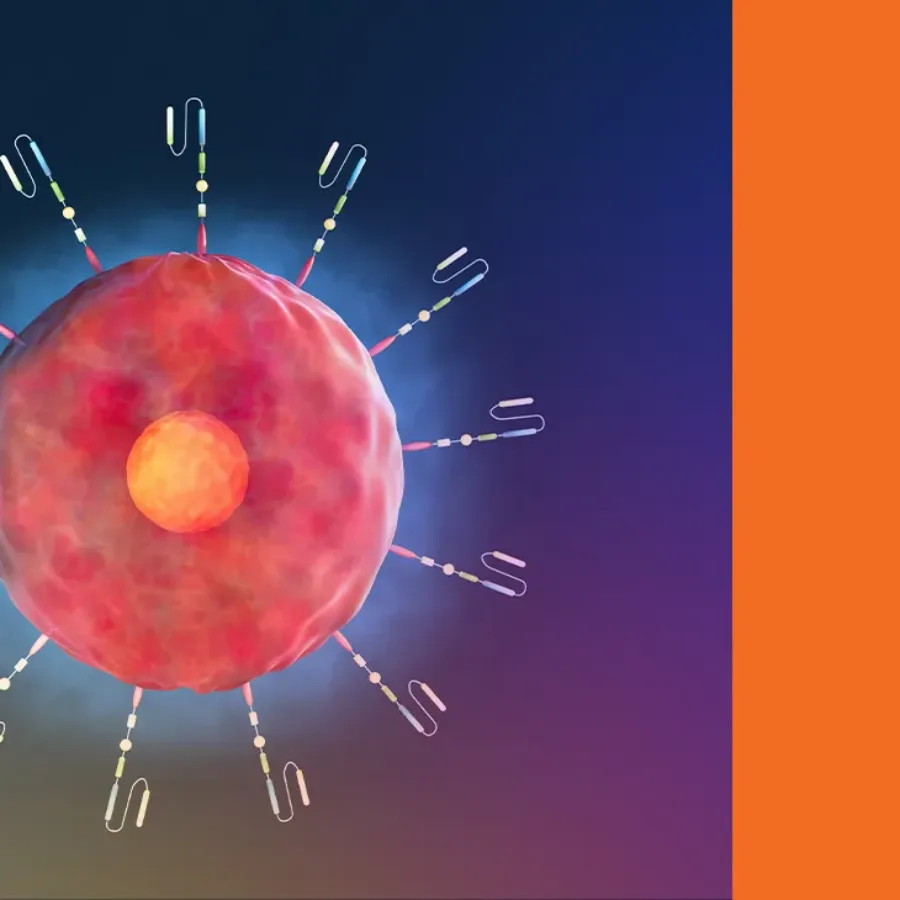
The process involves collecting a patient or donor’s T cells and genetically engineering them in a laboratory to express specialized receptors called “chimeric antigen receptors” (CARs). These CARs enable the T cells to recognize and bind to specific proteins (antigens) on the surface of cancer or other target cells. Once these “reprogrammed” cells are infused back into the patient, they act as a “living drug,” seeking out and destroying target cells with high precision.
Bioanalysis for CAR-T cell therapy in drug development
Flow cytometry for CAR-T characterization and immune monitoring
Flow cytometry provides high-resolution, single-cell analysis essential for CAR-T product characterization and clinical immune monitoring. High-parameter flow cytometry panels are used to evaluate:
- T-cell phenotyping, exhaustion markers, activation markers, and persistence signatures
- Assays to quantify engineered cells and immune subsets post-infusion
- Functional profiling to assess effector function and cytotoxic potential
These cellular insights help correlate product attributes with clinical outcomes and dosing strategies.
Biomarker and functional testing for CAR-T therapies
CAR-T therapies drive complex immune responses that require comprehensive biomarker analysis to evaluate efficacy and safety. Common platforms include:
- ELISpot assays to measure antigen-specific T-cell responses or immunogenicity signals against transgene or CAR constructs
- Immunogenicity testing to evaluate anti-CAR immune responses
- Multiplex cytokine analysis using ELISA, MSD, Luminex to monitor pharmacodynamic and inflammatory signaling
Integrated biomarker data helps predict therapeutic response, identify safety risks such as cytokine release syndrome, and improve mechanistic understanding.
Molecular and genomic testing in CAR-T programs
Molecular assays confirm successful T-cell engineering and monitor CAR-T persistence after administration. Quantitative PCR (qPCR) and digital PCR (dPCR) are commonly used to evaluate:
- Vector copy number (VCN) in engineered T cells
- Transgene mRNA expression profiling
- Pharmacokinetics & pharmacodynamics related to cell persistence and activity
These molecular endpoints support regulatory submissions and CAR construct optimization.
Phases of drug development for CAR-T cell therapy
CAR-T programs typically require integrated bioanalytical testing across multiple development stages:
Discovery:
Researchers evaluate CAR construct design, target engagement, and early functional performance to identify optimal candidates.
Preclinical:
Studies focus on engineered cell persistence, biodistribution, and biological activity to support investigational submissions.
Clinical Trials and Translational Research:
Clinical bioanalysis monitors therapeutic activity, durability of response, immune safety signals, and patient variability.
CAR-T FAQs
What is CAR-T cell therapy and how does it work?
CAR-T therapy is a personalized immunotherapy that engineers a patient’s or donor’s T cells to target and destroy disease-causing cells. KCAS Bio supports CAR-T development by evaluating potency, persistence, safety, and immune response throughout clinical programs.
Why is specialized bioanalytical testing important for CAR-T therapies?
Because CAR-T cells are living therapies, integrated molecular, cellular, and biomarker testing is essential to monitor therapeutic activity, persistence, immune response, and safety throughout preclinical and clinical studies.
What molecular and cellular assays are used to evaluate CAR-T cells?
KCAS Bio uses qPCR, digital PCR, and high-parameter flow cytometry to assess vector copy number, transgene expression, T-cell phenotypes, activation/exhaustion markers, and functional activity, providing data critical for dosing and clinical outcomes.
How does biomarker testing support CAR-T therapy development?
Biomarker analysis, including ELISpot, immunogenicity testing, and multiplex cytokine profiling, helps predict therapeutic response, identify immune-related safety risks, and improve mechanistic understanding of CAR-T therapies.
Which CAR-T programs and stages of development does KCAS Bio support?
KCAS Bio provides integrated bioanalytical services across discovery, preclinical, and clinical development for both autologous and allogeneic CAR-T programs, supporting hematologic cancers, solid tumors, autoimmune disorders, and rare diseases.
Additional resources
 Blogs
Blogs
Evolving CAR Therapies and the Growing Need for Robust PK/PD Monitoring Chimeric Antigen Receptor (CAR) based therapies are a growing and continuing focus in oncology and autoimmune therapeutic development. They utilize either self (autologous) or donor-derived (allogenic) T cells that are genetically engineered to target and kill cancerous or autoreactive…
 Blogs
Blogs
Cell therapy clinical trials present unique challenges when it comes to monitoring both pharmacodynamic (PD) and persistence endpoints. Unlike traditional small molecules or biologics, cell therapies involve living products that interact dynamically with the patient’s immune system. Understanding how these cells persist, expand, and function in vivo is critical for…
 Blogs
Blogs
If you have trained in the field of immunology, it may not be uncommon to emerge with a self-characterization as either a “B-cell immunologist” or a “T-cell immunologist.” Historically, this distinction arose from years of specialization and the degrees of separation between T-cell and B-cell biology research. Approaches to therapeutic…

Tell us how we can help with your project
We've earned our reputation for delivering reliable, error-free data. We understand the importance of speed, flexibility, and consistency and only make promises we can keep.