
Evolving CAR Therapies and the Growing Need for Robust PK/PD Monitoring
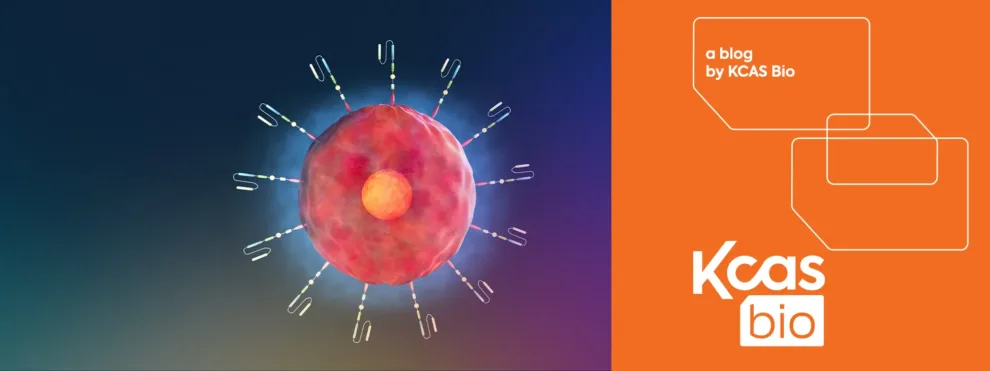
Chimeric Antigen Receptor (CAR) based therapies are a growing and continuing focus in oncology and autoimmune therapeutic development. They utilize either self (autologous) or donor-derived (allogenic) T cells that are genetically engineered to target and kill cancerous or autoreactive cells.
Evolution of CAR-T Constructs from First to Fifth Generation
With the success of approved CAR-T cell therapies, designs have continued to evolve from first-generation CAR constructs with simplified designs to fifth-generation constructs that overcome challenges of prior generations (Zugasti et al., 2025; Moon et al., 2025).
Importance of PK and PD Monitoring in CAR-T Clinical Trials
Tracking both the pharmacodynamic (PD) and the pharmacokinetic (PK) responses is critical in CAR therapy trials. Flow cytometry-based approaches that enable detailed evaluation of CAR-T persistence and phenotypic analysis are one such way to support the PK/PD biomarker strategy (Wang et al., 2025).
Flow Cytometry Method Development for CAR-T Persistence and Phenotyping
Generating biologically relevant and actionable results from flow cytometry-based assays requires focused development and validation steps. KCAS Bio regularly supports the development and validation of flow cytometry methods for immunophenotyping and PK assays to track circulating CAR-T cells. Considerations for method design include factors such as the intended use of data, sample matrix, sample stability, and critical endpoints. While a variety of sample matrices can be used, PK methods conducted on fresh or fixed whole blood minimize sample manipulation, preserve biological endpoints, and allow reporting of absolute cell counts. A companion PD assay for use with either fresh whole blood or cryopreserved PBMCs can extend the exploration of a CAR-T study.
Strategic Flow Cytometry Backbone Design for Rapid Pipeline Expansion
A well-designed assay not only generates reliable PK/PD for evaluating CAR persistence, phenotype, and biological activity but can also serve as a foundation for scaling future programs.
As therapeutic pipelines expand, several technical and operational criteria can drive the transition from using a standalone PK/PD method to a broader backbone-based strategy:
- Advancement to multi-asset clinical development
- Need to support parallel PD and PK data generation
- Time-sensitive initiation of clinical cohort testing
- Planned future expansions into other clinical regions
- Desire to maintain data continuity and cross-study comparability
- Risk reduction through avoidance of full assay redevelopment
Operationalizing Continuity: Customization Without Re-development
KCAS Bio helps sponsors accelerate global CAR-T programs by strategically customizing flow cytometry PK methods. This approach preserves analytical continuity, reduces redevelopment risk, and enables faster global clinical readiness.
Step 1: Leverage Established Phase I Assays
A sponsor used a CAR-T PK method developed and qualified for a U.S.-based Phase I study. Instead of building a new assay, KCAS Bio retained core components, workflows, and controls, preserving the backbone method while preparing for Phase II expansion.
Step 2: Strategic Customization for New CAR-T Constructs
The 18-color method with over 80 reportables per sample was customized for a different CAR-T construct. CAR-detecting antibodies were replaced with construct-specific antibodies, avoiding extensive re-development while maintaining data integrity.
Step 3: Fit-for-Purpose Optimization and Re-Qualification
KCAS Bio performed antibody titration, method optimization, and re-qualification using validated test scripts. These steps ensured the method met performance criteria for all reportables and was robust across instruments and analysts.
Step 4: Global Harmonization for Multi-Region Studies
The method was harmonized with our partner, CRUX Biolabs in Melbourne, Australia. Harmonization testing confirmed precision across instruments and analysts, making the 18-color PK method ready for clinical samples in both the USA and APAC regions.
Step 5: Accelerated Global Readiness and Risk Reduction
By leveraging an established assay and strategic customization, the total timeline from redevelopment to global clinical readiness was cut by over 50%. Sponsors benefit from reduced risk, preserved data continuity, and faster clinical execution across multiple regions.
Why Analytical Continuity Matters in Advanced Therapy Development
For clinical-stage cell therapy programs, the ability to evolve analytical strategies without disruption is critical. By establishing a robust PK foundation early and leveraging it strategically as the pipeline expanded, the sponsor avoided unnecessary redevelopment, preserved data continuity, and accelerated global clinical execution.
For sponsors developing complex modalities such as CAR-T therapies, working with a service provider capable of supporting method development, asset expansion, and global transfer through one team enables seamless progression, continuity, and ultimately, faster and more confident decisions.
Want to learn more about KCAS Bio’s approach to strategic method development and customization? Reach out today to connect.